 Watch · Listen · Read ↗
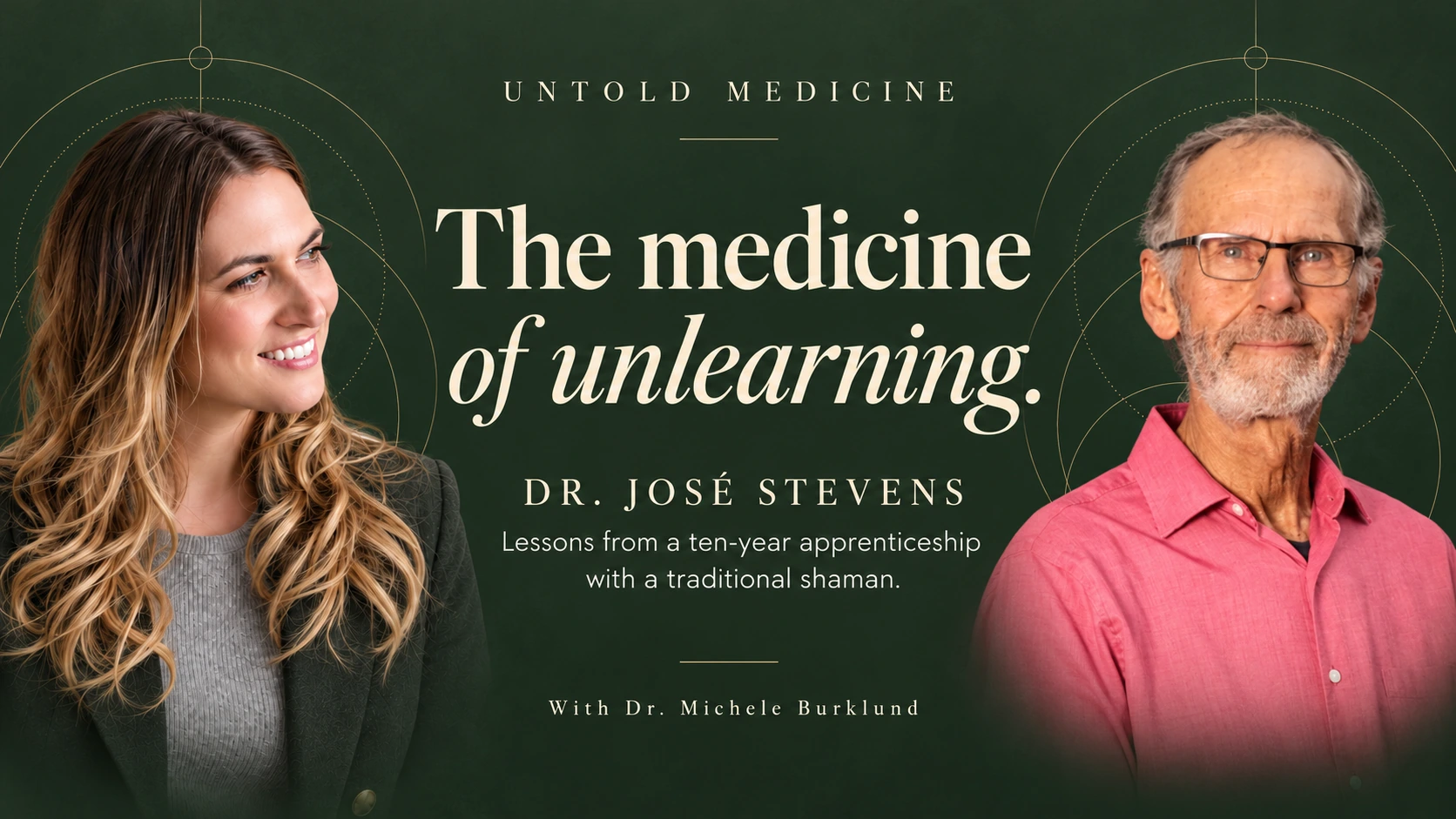
The Medicine of Unlearning
With Dr. José Stevens
Enter the conversation ↗
Vedic wisdom & philosophy
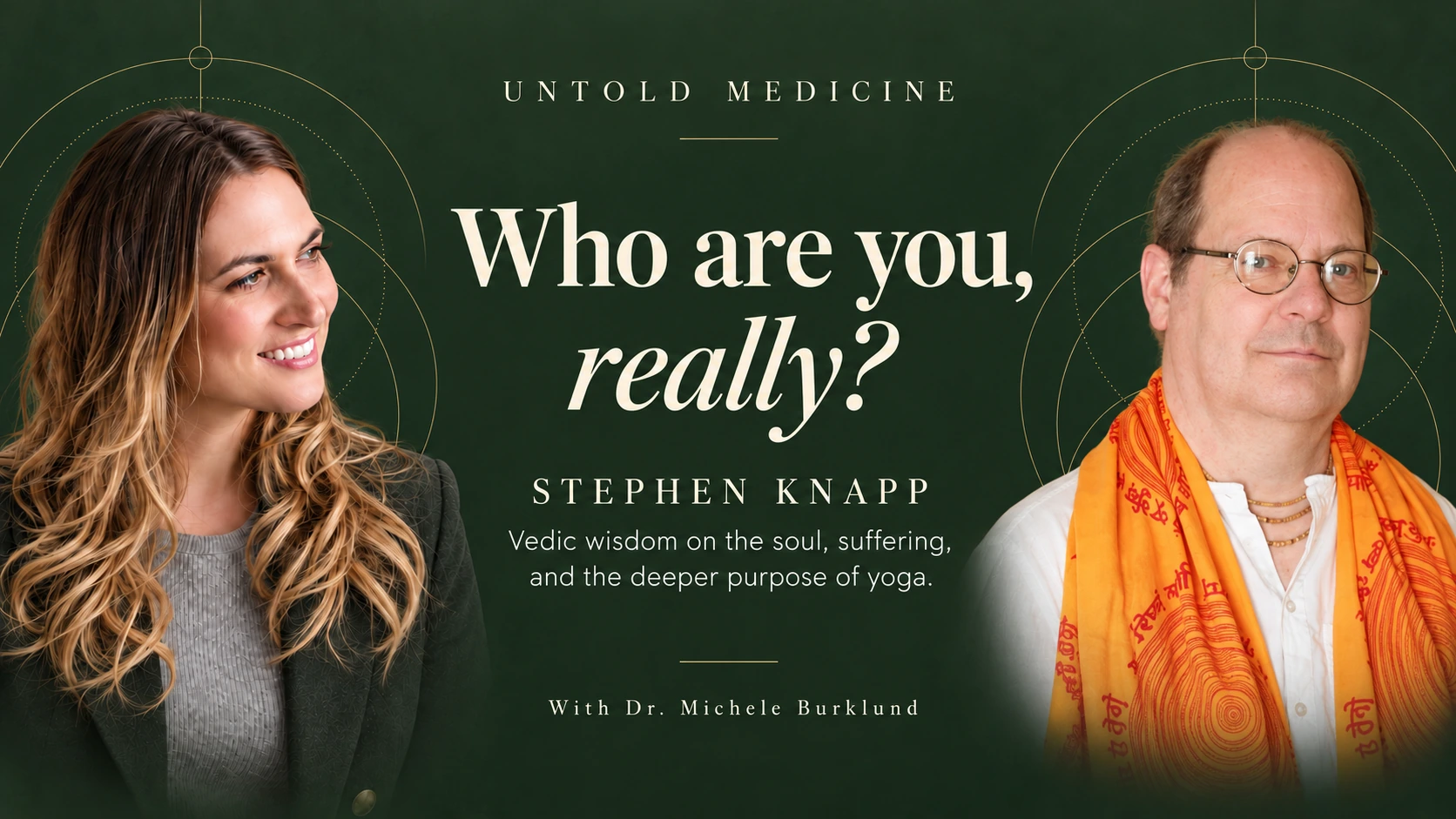
A conversation with Stephen Knapp
Yoga can begin with the body and open into much larger questions. I join Stephen Knapp to explore Vedic philosophy, spiritual identity, mantra, and the search for meaning that shaped his own life. This is an invitation to spend time with the traditions behind a familiar practice, and to listen for what feels worth contemplating.
The original conversation, in full. Watch on YouTube ↗
For a walk. For a quiet hour.
Inside the conversation
A guide to the ideas in this interview, in my own editorial words.
Knapp places yoga within a larger spiritual tradition concerned with identity, consciousness, and the relationship between the individual and the divine. Our conversation moves beyond physical postures into the philosophies that inform practice. He shares his understanding of Vedic teachings and the path through which he came to study them.
Knapp introduces the Gayatri mantra, the Maha Mrityunjaya mantra, and the Hare Krishna Maha-Mantra within his discussion of prayer and spiritual practice. The episode offers context for their place in the traditions he studies. Listeners can approach them as devotional or contemplative practices, without treating chanting as a treatment for a medical condition.
He answers through the language of Vedic philosophy, including spiritual identity and dharma. I ask about these ideas because they matter beyond an abstract discussion: people often meet questions of meaning in difficult seasons. His answers represent a spiritual perspective to consider, rather than a universal explanation for another person’s suffering.
No. I begin by asking Knapp about his own background and the experiences that drew him toward these teachings. The conversation offers a way into the vocabulary through personal stories and questions. You can listen with curiosity, pause at an unfamiliar idea, and decide what you would like to explore more deeply.
Stay with the words
Published automatic transcript, preserved from the original archive. Names and technical terms may contain errors. Guest views are their own; please refer to the recording for exact wording. Original transcript ↗
00:38Hi, everyone. I'm Dr.
00:39Michele Burklund, and this is Untold Medicine.
00:41And today we have a guest, Stephen Knapp.
00:45Stephen Knapp has written books on
00:48Vedic culture, eastern philosophy and spirituality.
00:51Stephen has studied the major Vedic texts of India and
00:54practiced yoga and eastern teachings for over 40 years.
00:59He's traveled extensively throughout India and
01:01has authored over 50 well received books
01:04on Vedic culture and spiritual philosophy.
01:07Today he continues to write books,
01:09articles, and give lectures at various venues.
01:13Welcome, Stephen.
01:14I'm excited to have you today.
01:16Namaste.
01:17Thank you for being...inviting me
01:22To get started...
01:23I wanted you to tell me a little bit about
01:25your background and how you went into studying Vedic culture
01:29and how you went so deeply into it.
01:32So tell us a little bit about
01:33your story of how you found it.
01:35Well, I guess you could say it all started when
01:38I was about seven years old, because I distinctly remember
01:41one time, of course there was many times.
01:44But I was laying in my bed as a child,
01:47seven years old, wondering, how did I get here?
01:52How did I get here?
01:54Not just here in this world, but
01:56how did I get this particular body?
01:58Why didn't I get my neighbor's
02:00body, Jack's body, or Dean's body?
02:03But if I got into that body,
02:06that means I would have his parents.
02:11If I had his parents, maybe I'm
02:13in a better position right now.
02:15Maybe my parents aren't so bad.
02:18But that was talk about how weird I was as a kid.
02:21Those were the kind of questions I was asking.
02:23How did I get here in this body?
02:24Why didn't I get into somebody else's body?
02:26Because I already had a feeling and a
02:29perception that I was more than this body.
02:33I was simply a person, a spirit soul that
02:38got injected, you might say, into this particular body.
02:42But now that I'm in this body,
02:44why do we have to feed it?
02:46Why is it so vulnerable?
02:48You don't breathe for 10 seconds
02:49and you almost die or something.
02:52Or you feed it, and then you've got to take it to the
02:55bathroom, and you got to make sure it gets so much rest.
02:58And all this other stuff, it
03:01just didn't seem natural to me.
03:03I mean, I don't know where I came from before
03:05this level of existence, but this level of existence in
03:09this particular body was not suitable for me.
03:12It wasn't comfortable.
03:13I've never been comfortable in this particular body.
03:16I've never been comfortable in this
03:17particular world, for that matter.
03:19I mean, you get used to it after a while.
03:21But the question still remains, how did I get here?
03:25Where did I come from?
03:26Where am I going, and where should I be going?
03:31In other words, is there a purpose behind all this?
03:34So these were the kind of questions I had.
03:36And of course, being raised a Christian, sometimes you'd ask
03:39people these questions and they didn't have the answer, or
03:42they would say, don't worry, if God meant for us
03:45to know, he would supply the answers.
03:47Well, I want the answers.
03:50I want to know anyway.
03:53You get involved in so many different things
03:55in school and stuff as you're growing up.
03:57But then I was a musician in my late teenage
04:01years, and some of us would get together, some of
04:05us more avant-garde musicians, would get together and wonder, okay,
04:09where do we fit into this world?
04:10And that kicked off that original questioning that I
04:14had was that maybe it's time I should put
04:18my guitar down for a little bit and actually
04:21try to investigate, what am I doing here?
04:24What am I supposed to be doing here?
04:26What's the purpose of all this to begin with?
04:30So that's what I did.
04:31I put my guitar down for a little while, and
04:33I just started looking around, and I guess you could
04:36say I conducted my own comparative religion class where I
04:39studied everything, everything I could get my hands on.
04:42Of course, born and raised a Christian, I figured,
04:44well, might as well start with the Bible.
04:46So I studied the Bible from cover
04:48to cover, read the whole thing.
04:50It took me a whole year to do
04:51that because it's not always the easiest reading.
04:56And I could see where it's got a
04:57lot of wisdom, it's got a lot of
05:00moralistic principles that it teaches, that it presents.
05:04But it still didn't give me the answers as to who
05:08am I as a spiritual being and how to recognize the
05:12existence of God in all creatures and things like that.
05:18So I started looking around.
05:21I checked out Judaism, Egyptology, magic, tarot,
05:27I ching, Eastern mysticism, Buddhism, practically everything.
05:35And then gradually, I had a friend of mine
05:37that was also into this kind of thing.
05:39We'd have these conversations about the
05:41topic that we're speaking about now.
05:43And he went to Toronto.
05:45We are originally from Michigan in a small town
05:47of Buchanan in the southwestern corner of the state.
05:52So he went to Toronto and met some
05:54Hare Krishna devotees on the streets,
05:57and they gave him a little pamphlet of the books they had.
05:59Back then, they only had about six books.
06:02They got a whole bunch of books now.
06:05So he brought that back, and we were going over
06:08this pamphlet, and he was saying, yeah, there's this book.
06:11And, yeah, I'm interested in this one.
06:13This is easy journey to other planets.
06:15And this one here, I said, what's this one?
06:18He said, this is like the Hindu
06:20Bible, and it was the Bhagavad Gita.
06:24So I said, that's what I want,
06:26because that's what I was looking for.
06:27That's what I was studying.
06:29What are the different cultural presentations
06:32on who and what is God?
06:34Who are we?
06:36What is our spiritual identity and so forth?
06:39How we got here, where we should be going?
06:42And so I said, that's what I want.
06:45So I got this... sent for the Bhagavad Gita,
06:48which was a little blue edition at the time,
06:52an abridged edition of what they came out with
06:54later, and by A. C. Bhaktivedanta Swami Prabhupada.
06:59And so once I got that, I looked into it and
07:02started reading it and told me all about what is karma?
07:06What is the soul, what is reincarnation, who or
07:10what is God, how we got here, where we're
07:13going, where we should be going, answered all the
07:15questions, the essential questions I had.
07:17Because the interesting thing, too, is in the Upanishads,
07:19there's a verse that says, until you begin to
07:22ask these questions, you're not even a human being,
07:25because that is the purpose of life, is to
07:27ask these questions and no questions...
07:30That's one of the things that I really
07:32was attracted to about the vedic culture, is
07:34that no question is out of bounds.
07:37Because in some religions, if you ask too
07:38many questions, you're considered a doubting Thomas, or
07:42you lack faith or something like that.
07:44But in the Vedic tradition, it's
07:46all based on questions and answers.
07:49And practically speaking, if you have a
07:51question, it's practically already been answered somewhere.
07:54You just have to find out where it is.
07:56So whether you take the Upanishads, the
07:58Vedanta Sutras, the itihasas, like the Ramayana,
08:01the Mahabharat, and Bhagavad Gita.
08:04Bhagavad Gita is just one chapter of the
08:06Mahabharata, or even further into the Puranas.
08:09It's all based on questions and then answers.
08:13And you can ask practically any question you want.
08:17And through that process, you begin to find out what
08:21is the purpose of life, who or what you are.
08:26Not only that, but it's not just answers, but it's
08:29also the process of yoga that they give you, which
08:33gives you the means by which you can spiritualize your
08:37consciousness so that you actually perceive what the answers mean
08:43and perceive your own identity as a spiritual being, which
08:47is more important than just having the philosophy but it's
08:50when knowledge becomes realized.
08:53Knowledge, or gyana, becomes vigyana,
08:55as they say in Sanskrit.
08:57And this is the difference.
08:58So once I got this Bhagavad Gita, then all
09:01I knew is, I want more of this.
09:04Whatever it is, I want more of it,
09:06because these are the answers I'm looking for.
09:08So then I got into the Upanishads and Manusmriti
09:12and whatever I could get my hands on.
09:15And it was like the one last piece
09:19of the puzzle that I was putting together,
09:21because I could see all this knowledge from
09:23all the studying, all the different cultures.
09:25It's all connected, it's all related.
09:28It all presents various aspects of
09:32what is the spiritual truth.
09:34But this was like the final piece of
09:36the puzzle, which put it all together.
09:38So this is what I really
09:40wanted and continued to pursue.
09:42And then gradually I decided, maybe it's time
09:47I should give up music and take this
09:50spiritual process a little more seriously.
09:53When was it?
09:54So then I started going to temples back in 1972
09:58and started to learn temple etiquette and rituals and seeing
10:04them, at least, and getting used to it, especially the
10:10vegetarianism, which I adopted at that time as well.
10:14I had three things that happened.
10:16I had a book called the Shri Ishopanishad
10:20which explained that one should not kill animals
10:25just to satisfy the taste of the tongue.
10:27Then I had a vegetarian friend who said, yeah,
10:30it's not so difficult to be a vegetarian.
10:32And then the other thing was,
10:33I never liked eating meat anyway.
10:35I didn't care for it.
10:36I didn't like the cruelty that was behind it.
10:39So all of these three things came together, and
10:42I decided, okay, I'm going to be a vegetarian.
10:45I remember I was just starting
10:48to move out of the house.
10:50I'd already lived out of the house for a while,
10:52but I started to move out of the house, and
10:53my mother was saying, oh, you're going to be vegetarian.
10:56So now what am I supposed to make for you?
10:58I said, anything without meat, that's all.
11:01It's not so difficult.
11:02But then shortly after that, I moved out
11:05and practically never lived at home again, except
11:09for very short periods of time.
11:11And so then when I started going to
11:13the temple, they had these massive vegetarian feasts.
11:18That was a whole ’nother trip.
11:20It was like all this delicious food that was
11:24indian based, indian based recipes, but without meat or
11:29any cruelty in it or anything like that.
11:32And, boy, that opened up a whole
11:34’nother door of spirituality for me.
11:42I was still attached to music,
11:43but gradually giving it up.
11:45And so then I finally joined the ashram in 1975.
11:50And then I started getting serious about studying
11:54the process of developing a spiritual connection between
12:00myself and God and all other beings.
12:07I went on with this for about ten years, until
12:111986, I think it was 1985 or 86, when I
12:17decided, you know, I want to try to explain this
12:21process and this knowledge to others, mostly westerners.
12:26I was mostly interested in explaining this to
12:28other westerners, because as many westerners are, when
12:31they see something that they feel is great,
12:33they want to share it with others.
12:34And so that was very typical of me.
12:37And so I came out with my first book at
12:39the time, which was The Secret Teachings of the Vedas.
12:43And what I did was, I tried to make a
12:47point, okay, this is the way that it's presented.
12:51This idea is presented in the
12:53vedic literature in such a way.
12:55Then I would come up with the references.
12:58So in that way, I tried to let the vedic literature
13:01speak as much for itself as possible, because a lot of
13:05new age books, they come out with all this theory, all
13:09these great revelations, but where is it coming from?
13:14They don't give any references to
13:15where it's coming from or anything.
13:16So I wanted to do the exact opposite with that.
13:18I wanted to show that this is where it's coming from.
13:21And basically you could see that the roots of
13:24many of the new age philosophies and ideas were
13:27basically established well within the vedic doctrine.
13:32That's pretty much how I stuck with that process,
13:37presenting an idea, an explanation, and then the references.
13:40Where in the vedic literature this is explained
13:43even more thoroughly than what I was presenting.
13:47And it developed into a bit of a cottage industry.
13:51I remember one time, this was back in the
13:56early nineties, and I got a phone call,
13:59phone call from somebody saying, do you have the
14:03secret teachings of the Vedas for sale?
14:07I says, yes, I do.
14:08What's the wholesale price?
14:09Well, it's $6.72 or whatever it was back then.
14:12Okay, can you send that to us? Yeah. Okay.
14:15What's your company name and address?
14:18We're Amazon.
14:20I'm going like, Amazon?
14:22What the hell is Amazon?
14:26But yeah, sure, I can send it to you.
14:28And so they would order one copy, then they
14:31would order another copy, then another copy, and I'm
14:34going like, wow, this is starting to change things.
14:40It just kind of developed where I wrote one
14:43book, another book, another book, and the vedic prophecies
14:47was another book that came out later on.
14:51And then what was it?
14:52How the universe was created, basically the vedic
14:55version of the creation of the universe.
14:57How everything comes together, how the spiritual
15:00energy is condensed in a way, which
15:02becomes material energy, that kind of thing.
15:06And then basically, I came out with another
15:08book called Proof of Vedic Culture's global existence,
15:12where I came out with a book that
15:14explained the evidence that you can see in
15:16other cultures from all over the world, where
15:20its influence from the vedic tradition can be
15:24recognized with the proper understanding, the proper knowledge.
15:28And I didn't think anybody would
15:30be that interested in that book.
15:32And I have to admit, it's been one of
15:35the dumbest decisions I ever made to think like
15:40that, because it became one of my most popular
15:43books, especially amongst other Indians and even academics, whether
15:48they agree with it all or not.
15:50But to propose the ideas that in this tradition
15:58or in that tradition, you can see that this
16:01is coming from the vedic literature, the vedic tradition,
16:05and presented in this way, in this particular text,
16:10whether it was from Cambodia, you know, even Africa.
16:18Some of the african traditions are very similar.
16:20So you could once again see, on a whole
16:22different level, the connections from the various cultures from
16:26around the world and how they're all intertwined, and
16:30they have a basic root or similarity that can
16:33be connected with the vedic tradition itself.
16:36So once that book came out, it did become one of
16:40my better selling books, which was much to my surprise.
16:43And it also opened the doors for me to become
16:50more accepted in India, where I was getting invitations, invitations
16:55to accept a speaking engagement in a conference.
17:00Or even once I got there, different organizations would set
17:06up lecture tours for a month, maybe at a time.
17:12I remember one lecture tour I did, and it was one of
17:17my more recent ones, when I was starting to get a little
17:19older, and people were wondering if I could do it.
17:22But for a month, I did something like 92
17:27lectures at 70 different organizations, all within 30 days.
17:32And even then, some of the people were saying,
17:35yeah, we weren't sure if you could handle it
17:38at your age, I think anybody handling that, yeah,
17:44it was about three lectures every day, plus oftentimes
17:49an evening program at somebody's house.
17:54And I had usually maybe one day off a week.
18:00But, yeah, I made it through,
18:02and it was an amazing experience.
18:05I met a lot of people, a lot
18:07of people, and impressed a lot of people.
18:10And I was also impressed with them.
18:15But anyway, that was part of a series of
18:18events that opened up only because of that one
18:20book, proof of vedic culture's global existence.
18:23And then I came out with other books after that.
18:25Now I've got over 50 books that
18:27are available, and they're still selling.
18:31And even though I've slowed down quite a bit.
18:34I have to admit that I'll be quite frank about it.
18:37I don't do as much writing and
18:38I don't do as much traveling.
18:40I mean, I have to admit
18:41I don't care for airplanes anymore.
18:43I don't care for airports anymore.
18:46And it's one of those things I can do without.
18:49And I reach a stage of life where, if
18:51it's not fun anymore, should I really do it?
18:55So I've slowed down quite a bit in that regard.
18:58But still, I do some podcasts like this once in
19:02a while, and I'm still very active in other ways.
19:07And people still write to me about my
19:10books and ask questions and things like that.
19:13So that's pretty much how it got started.
19:15And then, of course, the other part of it is
19:18once I was in the ashram back in 75, I
19:22got initiated by A. C. Bhaktivedanta Swami Prabhupada in 1976, and
19:30got a spiritual name called Sri Nandanandana, which can be
19:35a tongue twister for some people.
19:37But basically what it means is it's
19:40a very confidential name of Lord Krishna.
19:43It means Sri, or the beautiful Nanda, which
19:47means Nanda Maharaj, which is Krishna's father.
19:52And nandana means the son of or the son
19:57of Maharaj nanda, the beautiful son of Maharaj Nanda.
20:00And of course, at the end of that,
20:01we always say Das, which means servant.
20:04So I'm the servant of that particular person,
20:07which is another name of Lord Krishna.
20:10And then I became very involved in the process
20:13of Bhakti yoga and studied that very carefully, came
20:19out with a few books on that.
20:20Those books are doing well, too, surprisingly, because
20:23I wrote those books primarily for people that
20:25are interested in Bhakti yoga itself.
20:27And I don't know who's buying them, but some of
20:35my better books are those particular books on Bhakti yoga.
20:39And so now I've kind of gone
20:43through the know, studied Bhagavad Gita very
20:47carefully, studied the puranas very carefully.
20:50And now I'm entering into a new phase of
20:53Bhakti Yoga, which is called Raganuga Bhakti, which is
20:56a different level of Bhakti yoga itself.
20:59Not everybody's ready for that, but it's
21:04what I'm very much happy with right
21:07now and studying that very carefully.
21:10And so that's pretty much how
21:13I've all evolved in this process.
21:17And once in a while, I'll still do a lecture
21:20here and there, maybe at one of the local temples
21:22and stuff, and I'm pretty satisfied with doing it.
21:26I've reached a point of inner contentment where
21:29I'm happy with the work I've done.
21:33I was also the president of what organization
21:37called the Vedic Friends association for 15 years,
21:41and that was able to also break down
21:45some barriers in acceptability, especially to western people
21:52that are interested in vedic culture.
21:56But I've given that the presidency over to somebody else now
22:00and let them do it so I can take more of
22:02a background role in that and considered one of the elders.
22:06So that's interesting.
22:11I've pretty much come to this point now, and
22:14I'm pretty happy with what I've done, of what
22:15I've accomplished, how many books I've gotten out.
22:17And I can honestly say that I'm glad I wrote many
22:20of the books when I did, because my consciousness is on
22:27a different level now, and I probably would not be that
22:32interested in writing many of the books I used to.
22:34For example, proof of vedic culture's global existence
22:38is one book that I'm very proud of.
22:40I'm glad I did it when I did.
22:42And I came out with another book similar to
22:45that, with additional information called Mysteries of the ancient
22:48vedic empire, which took it up to a whole
22:51'nother level, which is more, I guess you could
22:54say, more academically oriented, with a lot of footnotes,
22:58a lot of references, stuff like that.
23:01But at this point in time, I'm
23:03hardly even interested in that topic anymore.
23:06So I'm glad I did it when I did, and now
23:09it's onward and upward to other things and other aspects of
23:13the spiritual tradition of vedic culture and Bhakti yoga.
23:17So that's pretty much in a nutshell
23:21what my background is and my development.
23:25Yeah, it's quite a journey.
23:27And I think all of your books have power, and
23:31that energy will always be there and everybody will find
23:34them who needs them at the right time, too.
23:38You put that out there, and I hope, like with this podcast,
23:42too, introducing more people to these books and how I found you
23:46and how it spoke to me, and I just found your book,
23:49and I'm like, oh my God, this is amazing.
23:51And it really speaks to me on a level I can understand,
23:55but it gives all these great references and I can dig and
23:58go deeper, like if I want to, based on that.
24:03There's a lot of amazing energy there where
24:06you built the foundation and the people have
24:09the opportunity to find them, too.
24:11Yeah, thank you very much.
24:13And that's exactly what I tried to do, is present
24:16the information in a way where you can go deeper.
24:20For example, I've got one book here called, well, two
24:24books called the power of Bhagavad Gita, which, for those
24:30people that want to look into Bhagavad Gita, this is
24:33a book that kind of gives an overview of it
24:35and what you can get out of it.
24:37And so if a person wants to think about
24:40getting into reading Bhagavad Gita, and I suggest
24:43Bhagavad Gita for everybody, you can also read this and
24:46get something more out of it.
24:48And then there's another one called, these are
24:51smaller books because, like, even the one you
24:56got, I think you told me you had
24:58the soul, our understanding of our real identity.
25:00Got it here. Yes.
25:02Got it there.
25:03It's something I wanted to present in a simplified way
25:07and in a short book, so that people don't feel
25:11encumbered with, like 300, 400 pages of something.
25:15Even though I got plenty of those books, too, I wanted
25:18to write something that was short and to the point.
25:21And this other book here is the power of
25:24the Maha-Mantra called what's so special about channing
25:27Hare Krishna, which is also a very powerful mantra
25:31in this day and age, and recommended as an
25:34easy process for spiritual upliftment.
25:36And that's the thing about this age of, well,
25:39it's kali yuga, because people don't have the time.
25:43They barely have the interest in delving deeply
25:47into genuine spiritual knowledge and developing the process
25:53for developing their own spiritual realizations.
25:56So you want to give them something
25:58in a way that they can accept
26:01easily, quickly, and without difficulty in understanding.
26:05And that's one thing I don't do, is I
26:09don't use a lot of Sanskrit in my books.
26:13There are some books you can get, and
26:14they use a lot of Sanskrit and everything.
26:16But I found that for some westerners, especially if
26:21you use too much Sanskrit, they get confused about
26:24the meaning of it or what the purport of
26:28the topic is when there's too much sanskrit words
26:33being used, and then they'll put the book down.
26:36And the point of it is, you don't know if
26:38they're going to pick the book back up again.
26:40So I try to keep it simplified in a way,
26:44and I don't use too much Sanskrit or anything like
26:46that, so that people can simply keep reading it and
26:50get as much out of it as they can without
26:52being encumbered by phrases, language, or even words that is
26:59going to make them stumble or get confused about anything.
27:04Yeah.
27:04And I think it's great.
27:05You apply a lot of real world examples inside your
27:09book, too, or to have it kind of think in
27:11a different way and then cite different sources.
27:14I feel like that helps me too.
27:15And then, yeah, giving people the opportunity, if they want
27:17to go deeper, then they can, but they get the
27:20knowledge and they get the feeling and the essence from
27:23this, which you've done a good job with. Thank you.
27:27Thank you very much.
27:29I have some intense questions for you,
27:31but that's also about this podcast and
27:34going deeper, that's the Purpose.
27:35So the next one is based on your
27:38wisdom that you've acquired throughout your journey.
27:40How do you view the purpose of
27:43life and the reason for suffering?
27:46Okay, that's a two part question.
27:50The first part of the question is the purpose of life.
27:54And I can pretty much summarize that up in
27:56the vedic culture, being the culture of Sanātana Dharma
28:00Sanskrit sanatana means that which is eternal.
28:06Now, eternally means what we do eternally, but
28:12also means our identity as what is eternal.
28:15What is our eternal identity?
28:18Dharma means, there's multiple meanings of dharma.
28:22Dharma also means duty.
28:24Duty to pursue in this life.
28:28What is our eternal duty.
28:29Sanātana Dharma, our eternal duty is basically to find out
28:35who and what we really are as spiritual beings.
28:40Dharma, the root word of dharma, is also dhri
28:43Also means balance.
28:46To reach a stage of life where we understand who and
28:49what we are and can become balanced in that identity and
28:55how we act in this material world for the benefit of
28:59ourselves, but also for the benefit of others.
29:02And so that we can attain that
29:05knowledge which lets us understand what is
29:09our connection with the supreme being.
29:12We're spirit, soul, or Atma, as it's called.
29:15And all Yoga is meant to connect us with the Paramātmā .
29:20Paramātmā means the supersoul.
29:23Supersoul Atma
29:25Paramātmā
29:26And so the connection is part of the duty of life.
29:31Part of the Sanātana Dharma is to establish that
29:34connection and understand who and what is God, what
29:37is our connection and how we not only understand
29:40that, but how then we act on that level.
29:43It's one thing to have the answers, but it's
29:45another thing to realize the answers and then act
29:49on that level so that we attain the proper
29:52balance, the proper attitude towards others, and so on.
29:58Now, suffering, what is the purpose of suffering?
30:00Well, unfortunately, there's three types of sufferings
30:04that are explained in the vedic literature.
30:08That is the Adhibhautik , Adhidaivik and Ādhyātmik.
30:12Ādhyātmik means the suffering which
30:15comes from simply having a body.
30:17You can't ignore it.
30:19That suffering can be toothaches, headaches,
30:23aches, and pains in the body,
30:25or more serious diseases, which happens.
30:28It happens because anything material breaks down.
30:32It goes through six phases.
30:34First of all, birth or creation, growth,
30:38sustenance, deterioration, disease or deterioration in the
30:44sense it begins to fade away or
30:46break down, and then finally death.
30:48Anything material goes through those six
30:51changes, including the material body.
30:54And part of that phase is disease.
30:57You get disease.
30:59The other part of the suffering goes from
31:02Adhidaivik which are natural disasters we've had lately,
31:08a severe winter in crossing over America.
31:12That's something nature gives.
31:14You can't expect a smooth ride all the time.
31:17We want a smooth ride, no doubt about it,
31:20and we're always hoping for a smooth ride.
31:23But then nature comes along and just
31:25crushes our hopes in that regard.
31:27Sometimes, whether it's through vicious winters, hot
31:31summers, drought, other floods, we're having all
31:36this rain come across now.
31:38It's like we're getting hammered
31:40by mother Nature these days.
31:42So it's basically the purpose of that is to
31:47let you know this is not your real home.
31:50It never is your real home.
31:52It never was, never will be your real home.
31:55We have to deal with it as best we can.
31:58But the idea is to search out where we really belong.
32:03And in that regard, we're like fish out of water.
32:06We're spiritual beings in the material world.
32:10Do we belong in this material world? No.
32:13How long does it take before we understand that?
32:16Well, a lot of suffering sometimes.
32:18Or sometimes you're born with
32:20that inquisitiveness, like that.
32:23The other third thing that
32:25I was mentioning is Adhibhautik
32:29The Adhibhautik suffering is sufferings caused by other
32:33living entities, whether it's other people, whether it's
32:37criminals, whether it's your neighbor's barking dog, whether
32:41it's biting insects or things like that.
32:44These are the three types of
32:46sufferings that never go away.
32:48And so sometimes people resort to whatever means necessary
32:52to decrease their suffering, whether it's intoxication, whether it's
32:59maybe getting involved in sports, or whatever it is
33:02to get their mind off the suffering.
33:04So, in many ways, and I don't mean to
33:06be a bringdown about this, but the vedic literature
33:08also explains that many times the freedom from suffering
33:13is simply the forgetfulness, the temporary forgetfulness of the
33:18constant bombardment of suffering that we have to endure.
33:22Of course, the more spiritual you become, the more you're fixed
33:26in the reality of who and what you really are.
33:30And I've often said that suffering only exists within
33:34the illusion, only the illusion that you're this body.
33:38And the whole goal of life is to make,
33:40satisfy and make happy, the mind and the senses,
33:45which is an uphill battle, quite honestly.
33:47So you have to look at yourself from a spiritual
33:51point of view, from the realistic or the reality point
33:54of view, so that you can begin to understand who
33:57and what you really are and how to actually attain
34:00real happiness, real happiness from within, not based on the
34:05externals around you, which are constantly changing and constantly giving
34:10you sources of frustration and problems.
34:14So the more inward you go, the more spiritually you
34:17go, the more free you become from all that.
34:20So it's like a fish being out of water.
34:24You can't do anything for a fish
34:26but bring it back to the water.
34:28Then it's going to be happy to some degree.
34:32And it's the same thing with us.
34:34We can be happy to some degree in this
34:37material world, but we'll never be fully satisfied, fully
34:40happy, until we reach once again our spiritual identity
34:44and regain access to the spiritual dimension, which is
34:49the whole purpose of yoga.
34:51So suffering has the...
34:55It's supposed to give you the impetus
34:58to understand and question your existence.
35:02Why am I suffering?
35:03Why am I going through this?
35:05Why is life so difficult?
35:06It's another way of asking, wait a minute. Who am I?
35:10What am I doing, and how did I get here?
35:12It all goes back to that.
35:14So this is really the purpose of suffering.
35:17But once again, to overcome suffering, we have to
35:22do more than simply resort to the forgetfulness of
35:24it or the intoxication, which is called the river.
35:30Visiting the river of forgetfulness.
35:32You have to do more than that.
35:33You have to go inward and actually
35:35understand your spiritual identity and go into
35:38the world of reality, spiritual reality, to
35:42actually understand who and what you are.
35:44Why am I here?
35:46Who or what brought me here?
35:49And how do I get out, really?
35:52How do I develop myself in a spiritual way where I
35:55can return to the spiritual world and take up real residence,
36:00where things go on in a continually loving basis.
36:05That's one thing we're all looking for.
36:07That's the nature of the spirit soul.
36:09We all want to love.
36:10We all want to love and be loved, but we can
36:14find maybe a glimpse of that in the material world.
36:16But even then, it's very difficult.
36:19It's hard to find someone who truly loves you.
36:22It's hard to find someone that you can truly love.
36:24And the problem with that, too,
36:26is that sometimes it ends prematurely.
36:29The person dies or I die, and then we're
36:32forced to look for another situation or whatever.
36:35I mean, is that fair or not?
36:37Well, it can seem like it's unfair.
36:39But it goes back to the two things.
36:42Suffering is meant to give you a lesson as
36:44to why you should look for your real home.
36:49It also gives you the impetus to
36:52ask, how did I get here?
36:54And why am I going through this?
36:56And if I'm going through this, how do I get out?
36:59That was Buddha's question, too.
37:01He saw there's so much suffering in
37:03the world, he decided, wait a minute.
37:05How do I get out of this?
37:07How did I get here?
37:08But how do I get out?
37:09So this is one of the things that is the
37:13basis of any very philosophical religion or culture, is to
37:18begin to understand, how did I get here?
37:21Where am I going?
37:22Where should I be going, and how do I accomplish that?
37:26So this is the next step.
37:28If you can understand the purpose of suffering, then
37:31you can also begin to understand there's a purpose
37:34that, don't think God created this creation without a
37:37means of getting out of here.
37:39That would be completely unfair.
37:41But the point of Sanātana Dharma, the point of
37:45yoga, is to regain and create or spiritualize your
37:51consciousness so that you can begin to perceive the
37:54spiritual dimension which exists all around you.
37:57It's like a radio.
37:58There's so many radio waves all around us.
38:01Do we see them? No.
38:03Do we taste them? No.
38:05Can we feel them? No.
38:06You have to have the right receiver, and then
38:10with the right receiver, a radio or cell phone.
38:13These days, there's so many things you
38:15can do with those radio waves.
38:17So it's not a question of whether they exist or not.
38:20It's a question of how you utilize them
38:22and how you can gain access to them.
38:24The spiritual dimension is the same way.
38:26It's a matter of how you develop yourself into
38:28being a receiver of understanding and perceiving all that
38:33spiritual dimension, all the different levels of spirituality that
38:36exist all around us all the time.
38:39And we're a part of that.
38:41But we need to develop ourselves so
38:43we can dive back into that dimension.
38:46And then we don't take suffering, we don't take
38:50disease, we don't take all the problems of life
38:53in the same way as we did before, because
38:56we rise up to another dimension.
38:58And as we rise up to
38:59that spiritual dimension, everything looks different.
39:02It makes all the difference in the world
39:05just by rising up to that level.
39:07And that's really part of
39:10the purpose of human existence.
39:13The animals can't do that so well.
39:15They're pretty satisfied with just getting enough
39:17to eat or things like that.
39:20Human nature is that, yeah, sure, we got to have
39:23enough to eat, but there's more to life than that.
39:26We need to understand how to accomplish that.
39:29And that's what the vedic literature is all about.
39:31It explains it from so many different levels.
39:33Anybody can plug into it on any
39:35level they want and proceed from there.
39:39So whatever your background is,
39:41it's perfectly all right.
39:43It doesn't matter.
39:44You can use whatever background you have and begin
39:47to plug into the vedic culture in whatever way
39:50is most suitable for you to begin your progress
39:54in understanding your spiritual dimension and how the spiritual
39:57dimension exists all around us.
40:00It's only a matter of spiritualizing our
40:01consciousness so we can perceive it and
40:03enter into that level of reality.
40:08Yeah, extremely well said.
40:10I think you touched on every point and truly
40:13explained that in a way that I understood too.
40:16I mean, just the real purpose of suffering and how it can,
40:22in a way, be a gift to go deeper in a lot
40:24of ways, although most people won't ever see that at the time.
40:27That'll come a lot later.
40:29Yeah, sometimes it's difficult, because when you're in the
40:31middle of suffering, it's hard to question, well, what
40:34am I supposed to learn from this?
40:37But that's what it is.
40:38Human life is like a classroom, and the suffering is
40:41like a class to motivate you or kick you in
40:43your butt, so to speak, to begin to question, okay,
40:48obviously, I'm not fitting into this world as much as
40:51I'd like to or much as I thought I would.
40:53Where am I supposed to go?
40:54Where am I supposed to fit in?
40:58Because if nobody ever suffered, why
41:00would anybody question their existence?
41:03Why would anybody question, well, how did I get
41:05this body, or whatever the case may be?
41:09So it's supposed to give you that motivation to
41:13question your existence and why am I suffering?
41:17And like I said, according to the vedic literature,
41:20until you ask those basic questions, you haven't even
41:23come up to being a human being yet.
41:26So this is what the purpose of this whole process
41:30of life is all about, is to get you to
41:32come up to the level of being discontent, being discontent,
41:37to the point where you can reach a spiritual dimension,
41:41where you can become content and happy with what your
41:45situation is, knowing full well that just studying this literature,
41:51studying this culture, and participating in the process of vedic
41:55wisdom, you begin to reach a stage of being balanced,
42:00being content, being happy with it, knowing that you're also
42:04making your way out of here, hopefully, once and for
42:08all.
42:09And I don't mean to say that material life
42:11is a real drag all the way around, because
42:13there's plenty of reasons to be happy with it.
42:15There's plenty of good people that
42:17we want to interact with.
42:18There's plenty of nice things that take place, but
42:21at the same time, it doesn't fully satisfy us
42:25on the deepest level, because what really satisfies us
42:29in any degree is whatever aspect of spiritual existence
42:35we can approach and we can develop.
42:37What do we appreciate about each other
42:40is our loving and contributory aspect.
42:46And that comes from the motivation of the spirit soul.
42:49The soul itself exists with that attitude of being loving,
42:53wanting to be loved, and wanting to help others.
42:57That's the nature of the soul.
42:58So the more we come to that nature, the more
43:01we become happy with what we are, with what our
43:06position is, and with our interactions with others.
43:08Without that, who needs material life at all if
43:14it's just filled with suffering without learning from it?
43:19So that's really the point of
43:20it, at least from that aspect.
43:22I mean, there's many more things that could be
43:24said, but we'll let it go at that.
43:26I know, I'm sure.
43:28Yeah, we could probably talk all day just on that
43:30one subject, or probably for a week or longer.
43:34So for the next question.
43:36I've always gone really deep on this question as
43:39a physician and throughout the years, too, and I'm
43:42interested to hear your viewpoint on it.
43:46How do you view illness in
43:47the body from a spiritual perspective?
43:50I think this is a really powerful question on what is
43:54the body and what does illness really mean in it?
44:01Yeah, there's two ways of looking at that.
44:04First of all, many times illness comes from bad
44:09habits, bad diet, the things we put into us.
44:14Maybe a bad atmosphere that we're
44:17working in, which creates negativity.
44:20Maybe we create a bad attitude.
44:24These things all tend to create negativity within the
44:29subtle body, or even the physical body, where we
44:35might smoke cigarettes or something, knowing full well and
44:38having been advised that smoking cigarettes might not be
44:41the best thing for you.
44:43Well, I know, and I'm going to
44:45give it up, but not right now.
44:48Or the fact that I can't give it up.
44:50I'm just too addicted to it.
44:52And then gradually we get
44:53cancer or something like that.
44:55And, oh, man, I knew.
44:56I knew this was going to happen.
44:58I shouldn't have done that.
44:59I should have changed my habits
45:00or should have changed my way.
45:02So these kind of things are illnesses of
45:05the body, which can sometimes be cured by
45:09changing our habits, changing our diet, maybe adding
45:13supplements, exercise, fresh air, things like that.
45:18But sometimes they can first be picked
45:22up or noticed within the subtle body.
45:25The vedic literature explains the subtle body
45:27as the mind, intelligence, and false ego.
45:31And yet it considers the false ego as an element.
45:35The false ego is an element which creates forgetfulness
45:38of our true identity as a spiritual being.
45:41And that's part of the process of
45:42yoga, is to overcome this false ego.
45:45But the mind and intelligence is
45:47also considered two subtle elements.
45:49Which make up the subtle body
45:52which the soul also resides in.
45:55When you have bad attitudes.
45:57One thing is that I remember reading where it was
46:01explained cancer was a person's manifestation of their desire to
46:10get out of this situation, to get out of this
46:12body, to get out of the material world.
46:15And so sometimes there might be
46:18a slight attitude of negativity.
46:21Which then creates symptoms in the body which actually
46:26assist us, although we may not want it that
46:30way, but actually assist us in accommodating the attitude
46:34we've developed by getting out of this body altogether.
46:37And cancer may be one of those ways of doing that.
46:42Cancer also may simply be bad
46:45habits, bad diet, things like that.
46:49But bad desires and bad attitude can
46:52also cultivate within the subtle body.
46:55To then manifest in the physical body, which then creates
46:59problems that we often have to try to overcome.
47:02Sometimes we can overcome the symptoms of disease
47:08by adjusting our attitude along with our diet,
47:12taking proper medication and things like that.
47:15With a proper attitude, we may
47:18be able to overcome these things.
47:19But sometimes, even with a proper attitude,
47:22we still suffer diseases in the body.
47:25Now, the second point of it is
47:28that also may be caused by karma.
47:32Karma is the secondary aspect
47:36of the manifestation of diseases.
47:39Karma usually means action, which develops
47:45into a reaction, like smoking cigarettes.
47:50What is the karma of smoking cigarettes? Well, cancer.
47:53Okay, there's a reaction to the action.
47:55But also karma can be when
47:59you associate it with reincarnation.
48:01And you can't get a proper understanding of
48:03reincarnation without the understanding the law of karma.
48:06Karma may be something from previous lives
48:11that we carry into this life.
48:13Like the fear of drowning, the fear of fire
48:17may be caused by something that happened in a
48:20previous life that we carry into this life.
48:24Or maybe there's something that we
48:26did in a previous life.
48:28Which causes reactions that we have
48:31to suffer in this life.
48:33And it could be the loss of a job.
48:36Maybe a car accident is a part of our
48:39karmic reaction we have to suffer or a disease.
48:43Now, when the disease is because of karma,
48:47then it may not be as simple as
48:50taking medication or changing a diet.
48:53To be free of that, you may have to go deeper.
48:57There's some mantras that can change one's karma.
49:02There's the practice of spirituality can also change
49:06one's karma, which also creates a freedom from
49:11disease or a lessening of the disease.
49:13Now, in the Brahma Samhita, it's explained that
49:18when one engages in spiritual yoga, or like
49:22bhakti yoga explained specifically, that process itself eats
49:28up karmic reactions like fire eats up wood.
49:33So in that regard, if we take up the
49:35process of spiritual advancement, spiritual cultivation, whatever we were
49:43meant to have, maybe like a broken leg, becomes
49:47minimized to maybe a stubbed toe or something like
49:51that, something that was extreme, becomes reduced to something
49:55minor, and it also can act that way.
49:58As far as disease goes as well, if the karma
50:02is too strong, then of course it's going to take
50:05a lot of work spiritually and a lot of chanting
50:09of mantras and stuff to have much of an effect.
50:13And I have to admit one thing.
50:16If I have karma to work out, I'd rather work
50:19it out in this life than to carry it with
50:22me into another life where I have to work it
50:25out all over again in another existence.
50:28That's just my preference.
50:30Nobody else has to follow that, but
50:32that's what I would prefer to do.
50:34And so if I'm suffering in this life, or if I
50:37have to die a particular way in this life because of
50:41my karma, I'd rather work it out knowing full well that
50:46whatever I'm doing is because of some previous action that I'm
50:51suffering from, that I don't have to carry with me in
50:54any new existence or next existence in another lifetime.
51:01So there's different ways of looking at that.
51:03But in essence, that's basically how some disease
51:08is explained within the body as manifesting from
51:14bad habits, subtle attitudes, or from previous karma.
51:22Depending on that, it will depend on how
51:24you want to work at trying to resolve
51:27the disease that you're suffering from.
51:31I think maybe some of other people's battles, too.
51:34Is identifying the origin of it, too, or
51:38figuring out where it could come from.
51:41Yeah, some people use hypnosis as one
51:45of those means of understanding where their
51:48problems, where their disease, or maybe sometimes
51:51to where their fears have come from.
51:53And some people have used that and
51:55have been rather successful as well.
51:57So there's different processes that
51:59can help in that regard.
52:01Yeah.
52:02And I think the next question is going to tie
52:03in really well, because from your book, prayers, mantras, and gayatris
52:11could you share a prayer or a mantra that could
52:14be powerful from those healing with illness?
52:17So people who are listening today that are suffering
52:19from an illness or condition, and they want to
52:21go down this route, or they're trying to figure
52:24out how it all ties in in their life.
52:27What's something you would share with them?
52:30Yeah, I can give you a few mantras, actually.
52:33I mean, of course, my book, prayers, mantras
52:35and Gayatrias has got, what is it?
52:38Something like 650 pages of mantras, prayers and gayatris
52:43that can be used for so many different purposes.
52:45But the famous Sri Gayatri mantra is very
52:50well known and the translation of this Sri
52:54Gayatri is very important and well known Gayatri
52:56mantra because it's chanted silently in the mind.
53:00Of course, I'm going to give it to you
53:02verbally, but it's chanted three times a day, morning
53:06at noon and then in the evening.
53:09And the translation is, Om, let us meditate on
53:14that worshipable effulgence of the divine sun.
53:18Savitri creator of the earth, heaven and
53:22ether, and who enthuses our meditation.
53:29So enthusing our meditation also means uplifting our subtle
53:34body and our subtle mind in that regard.
53:37And we all worship the sun because without the
53:41sun there wouldn't be anything, let's face it.
53:44But the sun also nourishes the body.
53:46In fact, I've heard it said from the
53:49process of ayurveda that morning sun can give.
53:54If you expose yourself to the morning
53:56sun, you can get all the vitamins
53:59you need for nourishment from that process.
54:03I don't limit myself to that specifically, but it's
54:07one of the things that I've heard that said.
54:09But the famous gayatri mantra goes,
54:11Om bhur bhuvaha svah tat savitur varenyam
54:16bhargo devasya dhimahi dhiyo yo nah prachodayat
54:21So that's the main gayatri mantra that
54:25many people throughout India and throughout the
54:28world chant when they say that.
54:30Now there's another mantra that is called the
54:33Maha Mrityunjaya mantra to Lord Shiva, and this
54:38is for removing ailments, ill health and fear.
54:43Now, the translation is we worship the three eyed one,
54:47which is Lord Shiva, who is fragrant and who nourishes
54:52well all beings and grants liberation, just as the cucumber
54:58is severed from bondage to the creeper.
55:01In other words, if you want to use
55:03the cucumber for recipes, nourishment or whatever, you
55:08got to chop it away from the creeper.
55:10So in the same way, this mantra helps grant liberation
55:15from fear and illness, just as the cucumber is chopped
55:19away from the creeper, the vine, to become useful.
55:24So this mantra goes, Om Triyambakam Yajamahe
55:28Sugandhim Pushti Vardhanam
55:32Urvarukamiva Bandhanat Mrityor Mukshiya Mamritat
55:42I knew a person who had cancer and he
55:46would chant this mantra over and over again for
55:48maybe an hour or two every day.
55:50And he gives credit to this mantra
55:53for his cancer going into remission.
55:56So this is also a very interesting mantra.
56:00I'll just say it one more time.
56:02Om Triyambakam Yajamahe
56:04Sugandhim Pushti Vardhanam
56:06Urvarukamiva Bandhanat Mrityor Mukshiya Mamritat
56:13And many of the gayatri mantras are all
56:15dedicated to one of the vedic divinities.
56:18So this is to Lord Shiva.
56:19There's another one here.
56:21Now this is, of course, another very well known mantra,
56:26and it simply means, may all be happy, may all
56:32be free from disabilities, may all look for the good
56:37in others, and may none suffer from sorrows.
56:42So this goes, Sarve Bhavantu Sukinah, Sarve Santu Nirmayaah,
56:45Sarve Bhadrani Pasyantu, Ma kaschid-Dukha-Bhag-Bhavet
56:57So that's also another one that they often
56:59chant in, say, different rituals and things like
57:02that to bring about auspiciousness and the good
57:06feeling in yourself, towards ourselves and towards others.
57:09So this is also very helpful.
57:13Another one of the main mantras
57:15that has to be explained.
57:17And that's what I wrote that one book
57:19on chanting the power of the Maha mantra.
57:23This is simply, everybody knows this one.
57:25Hare Krishna, Hare Krishna, Krishna Krishna, Hare Hare
57:29Hare Rama,
57:29Hare Rama, Rama Rama, Hare Hare
57:32And one can chant it or sing it or whatever, but
57:35I have a friend of mine and she says that in
57:37the morning when she gets up, she may not be feeling
57:40that well, she may be lacking energy or whatever.
57:43But after chanting this mantra for an hour or
57:45so every morning, after that, her whole day changes.
57:49She feels more enthusiasm, more energy, more lightheartedness
57:55and a connection, of course, with the divine,
57:58which is the ultimate purpose of that particular
58:00Hare KrIshna Mantra is to create within us
58:03an awakening of our own spirituality, our own
58:07spiritual identity, and what is our connection with
58:10the divine, the supreme spiritual being.
58:13So these are all very important and very
58:17useful and very easy mantras to chant.
58:23I highly recommend them and I use them
58:25in my own spiritual practice every morning, my
58:27own sadhana, and they definitely help me.
58:31They make a big difference in my life.
58:33So I'm sure it can do the same for your viewers
58:36and everybody else who comes in contact with them too.
58:39Yeah.
58:40Thank you for sharing.
58:41I can fill them even when you're
58:43speaking them at that moment too.
58:46I think there's real power.
58:47So I think that's a lot of great
58:49resources for the people who are listening.
58:52And if our readers want to start with one of
58:57your books, and I know this is probably a hard
58:59question to answer, if they want to dig in more
59:03and start learning, what would you advise would be the
59:07first book for them to start reading your book?
59:11Well, it depends on how deep they want to go,
59:13if they want to go in a simplified way.
59:16There's one here called yoga and meditation.
59:19Their real purpose and how to get started.
59:22Of course, the one you mentioned, the soul understanding
59:26our real spiritual identity, is another one, which is
59:31easy to read and not very long.
59:33So that's a good one to get started with.
59:36And you can get deeper into that.
59:37Then there's other ones that I've got called,
59:40one called the secret teachings of the vedas.
59:43And of course, you can go on my website, which is
59:46www.stephen-knapp.com, and you can look over
59:56the books that I've got on my front page.
59:58Just scroll down a little bit, and all
60:0050 books are listed, and you can decide
60:02which one might be best for you.
60:04And I've got another one.
60:05Now, this is a deeper book.
60:08What is this?
60:09This is like 400 pages, one of my long books.
60:13But this is called Bhakti Yoga, the Easy Path
60:17of Devotional Yoga, subtitled from the depths of illusion
60:21to making contact with God, and explains you the
60:24details of how Bhakti Yoga works and the step
60:28by step process in being able to follow that.
60:31But that's another book that's a little deeper.
60:33I have another book called the Bhakti Yoga Handbook,
60:36which is a little simpler and especially meant for
60:39those that want to practice Bhakti Yoga at home.
60:41But this one, Bhakti Yoga, will definitely explain all the
60:45intricacies and the step by step process of engaging in
60:49Bhakti Yoga, which is one of the easiest forms of
60:52yoga in this day and Age of Kali Yuga.
60:54So that's why I present that.
60:58But otherwise, there's so many different levels that
61:04you can get started on, and any of
61:05my books can help you do that.
61:07So hopefully that'll help out.
61:09Yeah, I think that's a lot of great information, and
61:11we'll be sure to put your website on the description.
61:14So wherever this video is, people can find
61:17it easy and take a look for themselves
61:19as well, see what resonates with them.
61:23So the last question we have today, which I
61:25think is pretty important just because especially in America,
61:28what yoga is today and how it's very commercialized.
61:32And it can be very confusing when you
61:34say that word or what it really means.
61:38So how do you feel about the yoga movement of today?
61:41And what do you think the real purpose is of yoga?
61:46Well, in a way, I think any progress in
61:50yoga is a good thing, and any form of
61:54advocating yoga is also a good thing.
61:59And in some ways, it can be used as a
62:01secular means of simply developing the body and the mind
62:05in doing the exercises and things like that.
62:09But it's a step by step process.
62:12The yoga that we see today is primarily Hatha yoga.
62:15Hatha yoga is basically the first step in Yoga, in
62:19preparing the body for what is actually meant to be
62:22long periods of deep meditation, so that the energy flows
62:27nicely through the body, so that you can sit for
62:31long periods of time, if necessary, to meditate.
62:34And meditation itself is as it's described in
62:38some places, where it's a matter of extending
62:42the gap between one thought and another.
62:46Because in that gap of vacancy of the mind, one
62:52becomes able to get a glimpse of your true spiritual
62:56identity without all the internal conversation always disrupting your focus
63:04on who and what you really are.
63:06Because the mind is like that.
63:08Mind is considered the center of the senses.
63:10So you've got all these senses coming at
63:13you, whether it's feeling, hearing, seeing, smelling, touching.
63:19All these different things are constantly coming
63:21at you, and the mind is always
63:22interpreting it, oh, this is agreeable.
63:24Oh, that's not so agreeable.
63:25And then the intelligence kicks in and said, well,
63:27how can I get more of what is agreeable
63:29and avoid more of what is not agreeable?
63:34So this is how the mind is always acting.
63:37So you want to quiet the mind.
63:39And Yoga and breathing exercises, Pranayam is a means of
63:45assisting yourself to quiet the mind and be able to
63:49be less disturbed by the externals so that you can
63:53go more inward and then gradually understand what you really
63:58are as a spiritual being, and what is your connection
64:02with the supreme spirit, the super soul within you, or
64:06Bhagavan, the external aspect of God himself, and what is
64:14your relationship with God in this regard, and then how
64:17to act on that relationship.
64:20So Yoga is meant to bring yourself up to a
64:23level where you can begin to focus on that and
64:27meditate on it, and then eventually, even if you're able
64:32to, which is very hard to do in this day
64:33and age, reach a state of Samādhi.
64:36Samādhi means a constant flow of continual thought
64:42on the supreme object of meditation, which, of
64:45course, is the supreme spirit or God.
64:48And the more you meditate on God, the more you reach
64:51God, the more you can reach God in your next existence.
64:54The Bhagavad Gita explains that that which occupies the
64:59consciousness of a person at the time of death
65:02is where he takes up his next life.
65:06So the whole point of meditation is to reach
65:09the point of Samādhi, where you're constantly thinking of
65:12your ultimate goal, which is how to reach God,
65:16how to enter into the spiritual dimension, where you
65:19no longer come back to this material world.
65:22You've become spiritualized enough, where you no longer
65:26are interested in the material world anymore.
65:28You're no longer interested in
65:29satisfying the mind and senses.
65:31You're only interested in acquiring
65:34that which satisfies the soul.
65:36And as you reach that more and more and deeper
65:39and deeper, then that's the level of consciousness you develop.
65:44So that as you give up the body, you attain
65:49a particular level of consciousness and focus Samādhi, so that
65:53you are simply focused on the ultimate goal of life,
65:57which is to reach God in the spiritual dimension.
66:00That's really what Yoga is meant for.
66:03And we have different types of yoga
66:05that all help you do that.
66:06We have bhakti yoga, which is yoga of
66:10love and devotion towards the supreme being.
66:12We have karma yoga, yoga of action,
66:16Gyana yoga, yoga of knowledge and meditation.
66:22And we have Rāja yoga, or Ashtanga yoga, which is
66:25the ultimate goal of meditation, the meditative process, simply sitting
66:32and avoiding the senses, the sensory dictation that we always
66:37have, and being able to avoid that.
66:40Whereas Rāja yoga is based on emptying
66:44the mind of the sensory activities so
66:48that you can focus on the supreme.
66:52Bhakti yoga or even Mantra yoga is
66:55a process where we don't empty the
66:57mind, but we fill the mind with
67:00transcendental knowledge, transcendental activity, mental activity.
67:06In focusing on the pastimes of Krishna,
67:10the loving aspect of Krishna, the personality
67:13of Krishna, these kind of things.
67:15And we fill the mind with the transcendental
67:18sound vibration of the Hare Krishna mantra or
67:21other mantras, so that we can absorb ourselves
67:25in that which is much easier.
67:27It's much easier to fill the mind
67:29with transcendence than it is to empty
67:31the mind, to hopefully perceive transcendence.
67:36So this is the goal.
67:38And the point of this process in this day and
67:41age in Kali Yuga, is to fill the mind with that
67:44which is our ultimate object of meditation, rather than trying
67:47to relieve our mind of any sensory activity, so that
67:51we can focus on the ultimate object of meditation.
67:54Just meditate on it.
67:56Just chant Hare Krishna.
67:57Krishna is in his name.
67:58So just chant Hare Krishna.
67:59Just meditate on the puranas, especially the Bhagavat-purana
68:03which describes Krishna's pastimes and his activities and his
68:08different avatars, so that you're automatically focused on him
68:12without any, what should I say?
68:14Unnecessary austerity or difficulty or tapasya or practice,
68:22and just get to the point of it.
68:24Focus on Krishna, focus on the supreme Being.
68:27Everything is solved, simple as that.
68:30So that may sound easier than it
68:33is, but that's how you get started.
68:35And that's practically, as I've said in this kali yuga,
68:40it is the recommended process for this age.
68:45Yeah.
68:45And it seems as though everything is a building block.
68:48So starting at whatever stage in yoga and going
68:51to reach that point of clearing the mind.
68:56And that's a beautiful thing about the vedic process.
68:58Whatever level you want to investigate, it's all open.
69:01There's nothing that is said to be contradictory.
69:07There's nothing said to be unapproachable.
69:11You follow whatever process that works for you,
69:14because we're not dealing with just one lifetime.
69:19I mean, I know some of the monotheistic
69:20religions believe in, you got just one lifetime
69:22and you're going to heaven or hell.
69:24But in the vedic culture, that's not the system.
69:27The system is, we've already
69:28been through many lifetimes.
69:30We can take as many lifetimes as we
69:32need to investigate whatever part of the process
69:35of spiritualizing our lives that we want.
69:37It's recommended, of course, that if you want
69:40to speed things up, there are certain things
69:42that you can do and certain processes to
69:44follow, but it's completely up to you.
69:47So you're not restricted in that sense, as in, say,
69:52some other religions that might impose that on you.
69:55So that's one of the things I
69:56also like about the vedic culture. Yeah.
69:59It seems that as much as you want to question
70:01it, it has answers, and you can kind of start
70:04anywhere you want and you can find the information.
70:07Right.
70:09Well, thank you so much for coming
70:12today and sharing all of your knowledge.
70:14I feel like we could pretty much talk about each one
70:16of those subjects all day long, and maybe you, again, to
70:20go a little deeper just on one of those subjects.
70:22But thank you for your time today, and
70:24it was super amazing to get all of
70:26your wisdom and knowledge on vedic culture.
70:29Okay, well, thank you very much for having me
70:31and Namaste and Jai Shri Krishna, thank you very much.
Originally published January 30, 2024. Hosted by Dr. Michele Burklund.
Keep following the thread
Watch · Listen · Read ↗With Dr. José Stevens
Enter the conversation ↗ Watch · Listen · Read ↗
With Lauren Mahana
Enter the conversation ↗ Watch · Listen · Read ↗
With Ramsay Taum
Enter the conversation ↗Bring it into your everyday
Return to the essentials with The Foundations, my free audio course. Or explore the journal and the work behind these conversations.
For education and reflection. For personal health concerns, seek additional care and appropriate specialists.