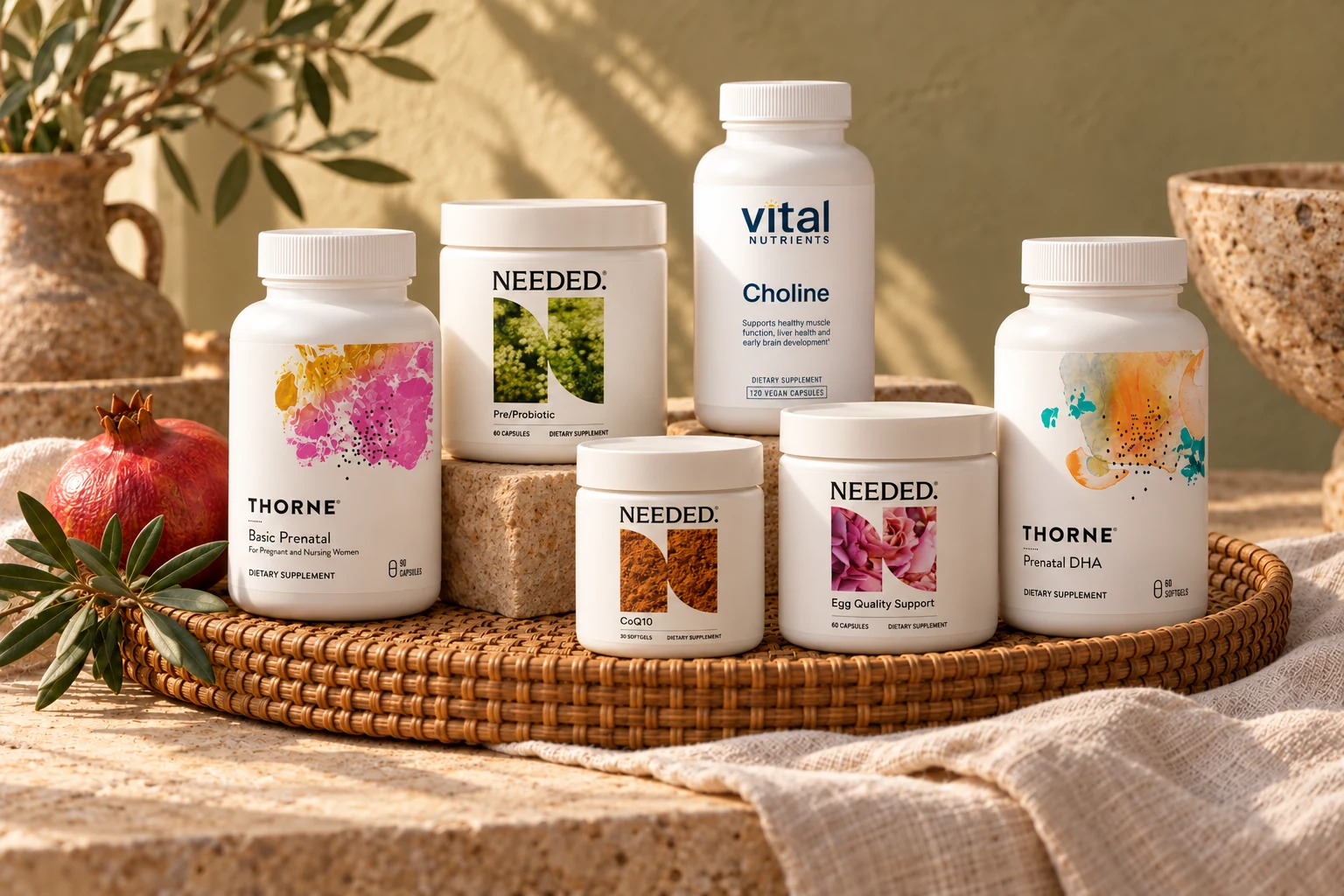
A closer look at the supplements I use most often in my practice, gathered into the protocols I return to. Botanical favorites, considered formulas, and a reason for every selection.
Explore the protocols I use for skin, midlife, longevity, grief, and preconception. Read the ingredients, find what fits your needs, and order individual products through Fullscript.
01 / SKIN & BEAUTY
The Radiance Edit
A more thoughtful kind of glow.
Botanicals, skin probiotics, nutrition, and topical care. Explore my selections for the ritual at the sink and the nourishment within.
Prenatal nutrition, CoQ10, egg quality support, choline, and prenatal probiotics, gathered into my preconception collection. Explore each selection around your own history and plans.
Knowledge in the formula. Intention in the choice.
I’m a naturopathic physician, a former chief scientific officer, and a member of MADE SAFE’s Scientific Advisory Board. My work with supplements and clean products has taught me to look closely: at the ingredients, the formulation, and the person who will use them.
These collections bring that perspective together with my enduring love of botanical medicine. The next step is choosing what belongs in your life.
Dried-urine testing explores sex-hormone levels, the metabolites produced as those hormones are processed, and cortisol patterns across the day. I consider this profile when looking more closely at menstrual changes, midlife symptoms, sleep, and stress physiology. The results belong within the story of your cycle, symptoms, and hormone use; follow the collection instructions for timing.
Comprehensive stool analysis
A stool-based look at digestive function, intestinal inflammation, and selected organisms within the gut microbiome. This can add detail when I am investigating persistent digestive symptoms or looking at how well the foundations of nourishment are working. I consider the findings alongside your food intake, bowel patterns, medication history, and symptoms when deciding which questions to explore next.
Comprehensive metabolic panel
A foundational blood panel that measures glucose, electrolytes, calcium, proteins, and markers related to liver and kidney function. It brings several connected systems into view at once. In my approach, these results help establish context before adding more specialized testing, and I look at patterns and changes over time alongside hydration, nutrition, and your health history.
Iron studies & ferritin
Looks at iron circulating in your blood, its transport and binding capacity, and the iron held in reserve as ferritin. I consider the full pattern when exploring fatigue, heavy menstrual bleeding, or possible nutritional depletion. These measurements help distinguish different iron patterns and inform a more thoughtful conversation about food, absorption, blood loss, and whether iron supplementation is appropriate.
Thyroid screening
Begins with thyroid-stimulating hormone, the signal that helps regulate thyroid hormone production. Free T4 is added automatically when the TSH result meets the laboratory’s criteria. This is a starting point for exploring thyroid function in the context of energy, temperature tolerance, bowel patterns, or menstrual changes; it does not automatically include thyroid antibodies or every thyroid measurement.
Apolipoprotein B
Measures apolipoprotein B, a protein found on cholesterol-carrying particles that can contribute to plaque in the arteries. It adds information about particle burden beyond the amount of cholesterol reported on a standard lipid panel. I consider it alongside blood pressure, glucose, family history, nutrition, and movement as part of a broader cardiovascular and longevity assessment.
Hemoglobin A1c & estimated average glucose
Measures the proportion of hemoglobin with glucose attached, providing a view of average blood sugar over approximately two to three months. Estimated average glucose translates that result into familiar blood-sugar units. I use the longer view to explore metabolic patterns alongside nourishment, movement, sleep, and other relevant markers; it does not show individual meal-related spikes.
Vaginal microbiome profile
Examines microorganisms present in a vaginal sample, offering a more detailed view of the intimate microbiome. I consider this information when exploring recurring changes in discharge, odor, irritation, or vaginal comfort. The findings are interpreted alongside symptoms, hormonal changes, and treatment history; the presence of an organism alone does not tell the whole story.
Anti-Müllerian hormone
A blood measurement of a hormone produced by small ovarian follicles, used to add information about ovarian reserve. I consider it within a wider preconception or fertility conversation that includes age, cycle history, and other findings. It can help inform expectations about response to fertility treatment, but it does not measure egg quality or predict whether you will conceive.
About these tests & references
Choose individual tests around your history, symptoms, and existing results, with your clinician’s guidance.
Care for the body carrying the grief. My selected tests explore vitamin D, thyroid function, cortisol patterns, inflammation, and cardiovascular health.
Measures 25-hydroxy vitamin D, the main circulating marker used to assess vitamin D status. In a period when time outdoors, food intake, and daily routines may change, I consider whether this foundational nutrient deserves closer attention. The result can inform an individualized discussion about food sources, sun exposure, and supplementation rather than guessing at a dose.
Daily cortisol & cortisone profile
Looks at cortisol and cortisone measurements collected at different times of day. The pattern adds context to the body’s daily hormonal rhythms and is considered alongside sleep timing, medications, and collection conditions. In grief care, I bring this information into the wider conversation about rest and daily rhythm; the test does not measure the depth of your grief.
C-reactive protein
Measures C-reactive protein, a substance produced by the liver that rises with inflammation. It can help show whether an inflammatory process deserves further attention or whether an established pattern is changing. I interpret it alongside symptoms, recent illness, and other findings, because a raised result does not identify the source of inflammation by itself.
Erythrocyte sedimentation rate
Measures how quickly red blood cells settle in a tube over a set period. This provides an indirect view of inflammation and can complement other measurements when the clinical picture calls for it. I look at the result alongside blood counts, symptoms, and history, rather than treating it as a specific diagnosis or a measure of emotional stress.
Advanced lipid & inflammation panel
Brings more detailed cholesterol-related measurements together with selected inflammation markers. This allows a broader cardiovascular conversation than total cholesterol alone. I consider the pattern alongside family history, blood pressure, metabolic health, sleep, nourishment, and movement—especially when the disruptions of loss have changed the routines that usually support your physical health.
Thyroid panel
Measures TSH, free T4, and free T3, giving a view of the regulatory signal and circulating thyroid hormones. Thyroid changes can overlap with concerns such as low energy, altered bowel habits, temperature sensitivity, or changes in mood. I consider these results when exploring physical contributors to symptoms during grief, while keeping your wider experience at the center of care.
About these tests & references
These tests explore aspects of physical health; they do not measure grief.
Choose individual tests around your history, symptoms, and existing results, with your clinician’s guidance.
Examines inherited genetic variants associated with selected nutritional, metabolic, and health pathways. I use this kind of information as context for a more personal discussion about food, movement, and lifestyle. A genetic tendency is not a diagnosis or a fixed outcome, and the results do not replace measurements of how your body is functioning today.
Hemoglobin A1c
Offers a view of average blood sugar over approximately two to three months by measuring glucose attached to hemoglobin. In a longevity assessment, I look at the trend alongside other metabolic markers and the daily foundations of food, movement, and sleep. It is useful for seeing the longer pattern, while individual glucose rises and falls require different measurements.
High-sensitivity C-reactive protein
Detects small amounts of C-reactive protein and can add information to cardiovascular risk assessment. I consider it alongside lipid results, metabolic health, and your clinical history when exploring inflammatory patterns. Recent illness or another inflammatory process can affect the result. Two testing options are included in this collection; they are alternatives rather than a requirement to order both.
Coenzyme Q10
Measures the circulating level of coenzyme Q10, a compound involved in mitochondrial energy production and antioxidant activity. I consider the result alongside your nutritional intake, supplement use, medications, and the question we are investigating. A blood level offers information about this compound; it is not, by itself, a direct measurement of mitochondrial function throughout the body.
Cellular micronutrient assessment
Uses living white blood cells to examine how they respond under different nutrient conditions in the laboratory. The assessment explores selected vitamins, minerals, and other nutrients through a functional testing method. I place these findings alongside dietary intake, digestion, medications, symptoms, and other relevant blood tests when considering whether a nutritional pattern deserves closer attention.
Polygenic risk profile · female
Combines information from many inherited genetic variants to estimate susceptibility to selected conditions. I consider it as one part of a prevention conversation alongside family history, current biomarkers, and lifestyle. These are probability estimates rather than diagnoses, and their accuracy depends on the condition assessed and the populations used to develop the scoring method.
Gut microbiome analysis
Examines microbial DNA and selected stool chemistry to describe aspects of the gut ecosystem. I consider the findings in the context of digestive symptoms, dietary variety, bowel patterns, and medication history. The aim is to ask more informed questions about the terrain of the gut; a microbiome report is a snapshot and does not establish a single ideal microbiome for everyone.
Biological age & health profile
Uses patterns of DNA methylation—chemical marks on DNA—to estimate biological age and related health measures. I view these results as an exploratory layer within a larger longevity picture that includes metabolic health, function, and daily habits. The estimates depend on the method used and do not predict your lifespan or prove that a particular intervention has reversed aging.
About these tests & references
Choose individual tests around your history, symptoms, and existing results, with your clinician’s guidance.
A little more insight beneath the glow. Two testing options from my clinical toolkit, bringing liver markers and antioxidant nutrients into the skin-care conversation.
Measures liver-related enzymes, proteins, and bilirubin to help assess aspects of liver health. In my skin-focused work, it offers broader context when health history, medications, or other findings make liver testing relevant. I consider it alongside nourishment and the full clinical picture; it is not a direct test of skin quality or a score of the body’s detoxification capacity.
Micronutrients & antioxidants panel
Measures vitamins A, C, and E, together with coenzyme Q10, for a closer look at selected antioxidant nutrients. I consider these findings alongside food intake, digestion, and supplement use when exploring the nutritional foundations of skin health. The panel helps describe nutrient status; it does not measure collagen directly or predict how your skin will look.
About these tests & references
Choose individual tests around your history, symptoms, and existing results, with your clinician’s guidance.
Measures selected metals in a venous blood sample. I consider this testing when an environmental, occupational, dietary, or household history raises a specific exposure question. Which metal is measured and when the exposure occurred both affect interpretation. The result helps inform the investigation; it does not provide a complete inventory of every metal stored in the body.
Heavy metals · 24-hour urine
Measures selected metals excreted in urine collected over a full day. The longer collection window provides information about excretion during that period. I interpret the findings alongside the suspected source, timing of exposure, kidney function, and collection instructions; urinary excretion is not the same as the total amount of a metal present in the body.
Environmental exposure panel
Looks for selected environmental chemicals or their breakdown products included in the panel. I begin with your exposure history—home, work, water, food, and personal-care products—so the testing has a clear purpose. Results describe the substances measured and can guide a more focused investigation of possible sources; they do not quantify every environmental exposure or establish the cause of symptoms.
Arsenic, lead & mercury · urine
Measures arsenic, lead, and mercury in a single urine sample. I consider this option when the exposure history points toward one or more of these metals. Timing, urine concentration, and recent dietary exposures can influence interpretation. Follow the collection instructions carefully, and view the result within a targeted assessment rather than as a general detox score.
PFAS panel
Measures selected per- and polyfluoroalkyl substances, a group of persistent environmental chemicals. I consider this information when a history of potential exposure gives us a specific question to explore. Results can document measured levels and support a discussion about reducing ongoing exposure, but they cannot identify the cause of symptoms, predict future illness, or determine treatment on their own.
About these tests & references
Choose testing with a clinician around a relevant exposure history; these are not general measures of a need to “detox.”
Choose individual tests around your history, symptoms, and existing results, with your clinician’s guidance.
Measures total cholesterol, HDL cholesterol, LDL cholesterol, and triglycerides. It is a foundational view of blood lipids that I consider alongside blood pressure, glucose, family history, nourishment, and movement. Looking at the full pattern and its changes over time helps frame a more useful cardiovascular conversation than focusing on one number in isolation.
Comprehensive metabolic panel
Measures glucose, electrolytes, calcium, proteins, and markers related to liver and kidney function. This is a broad starting point for understanding several connected aspects of physical health. I review the pattern alongside your symptoms, hydration, nutrition, and previous results to help decide whether a more focused investigation would be useful.
Comprehensive thyroid panel with antibodies
Pairs thyroid measurements with thyroid antibodies that can help investigate an autoimmune contribution to thyroid changes. I consider it when symptoms, family history, or prior results call for a fuller thyroid picture. Hormone results and antibody findings answer different questions; together with your history, they can help distinguish thyroid function from an immune process affecting the gland.
Functional health panel · female
A broad panel spanning hormones, thyroid function, metabolism, cardiovascular markers, inflammation, nutrient status, and selected environmental exposures. It includes measurements such as iron and ferritin, vitamin D, thyroid hormones and antibodies, sex hormones, and detailed lipid markers. I consider this option when a wider baseline is appropriate, while reviewing existing results to avoid unnecessary duplication.
Complete blood count with differential & platelets
Measures red blood cells, hemoglobin, hematocrit, platelets, and the numbers of different white blood cell types. It offers foundational information about oxygen-carrying capacity, immune-cell patterns, and clotting cells. I use it to add context when investigating fatigue or changes in physical health, often alongside iron studies or other tests selected around the individual story.
About these tests & references
Choose individual tests around your history, symptoms, and existing results, with your clinician’s guidance.
The tests I turn to in my clinic. A way to explore your own health.
In my functional and naturopathic approach, testing begins with a question. What are you experiencing? What has changed? What would the result help us decide?
I created this collection to share the functional tests I use in clinical practice, with attention to hormones, nutritional status, the microbiome, and the patterns behind persistent symptoms. Explore the guides below as you consider your next step.
Yes. You can explore and order individual products from my Fullscript collections. You do not need to purchase every item.
Where do I complete my purchase?
Product links open my Fullscript storefront in a new tab. Fullscript shows current ingredients, directions, availability, shipping, and pricing, and handles checkout.
Can I order labs on this page?
Yes. Select “Order tests myself” to open my Fullscript lab storefront, explore my collections, and choose individual tests. Fullscript handles ordering and provides your collection instructions.
What if I need help choosing?
Explore private care for individual guidance. Product suitability, doses, and combinations depend on your health history and what you already take.
I may earn income from purchases through my Fullscript storefront. Collections are options to explore; individual product and testing choices deserve review in the context of your own care.
A few useful answers
A thoughtful next step.
My edits are an invitation to understand your options and choose with intention.
Do I need every supplement in Dr. Burklund’s protocols?
No. You can select individual products. Start with the reason for considering a product, its ingredients, what you already take, and how you will assess whether it is useful. A public collection cannot account for every person’s circumstances.
Can I order Dr. Burklund’s favorite lab tests myself?
Yes—open my Fullscript lab storefront to see the tests available to you. Fullscript shows current pricing, eligibility, and the requirements for each order. Plan how the results will be interpreted and what follow-up you may need.
Does a normal test result mean my symptoms do not matter?
No. Laboratory results are one part of assessment. Your history, symptoms, examination when appropriate, and the reason a test was ordered all matter. Bring the original report and your questions to a qualified clinician.
How do I choose between an AI protocol and physician-guided care?
An AI tool can help organize questions, but a generated protocol is not a personal clinical assessment. Consider who reviews your history, checks the recommendations, interprets results, and follows up with you. Read my guide to functional medicine and AI health tools.